
If you are searching for the best ghee in India, you’ve probably seen dozens of options,
- pure cow ghee,
- pure desi ghee,
- A2 ghee,
- bilona ghee
All claiming to be the best. But how do you really know which ghee is pure, which brand is trustworthy, & which one suits your cooking and health needs?
This complete guide will help you choose the right ghee with confidence. You’ll know
1. How to identify pure ghee, compare A1 vs A2 vs buffalo ghee
2. Understand pure ghee prices,
3. Discover the best ghee brands around India
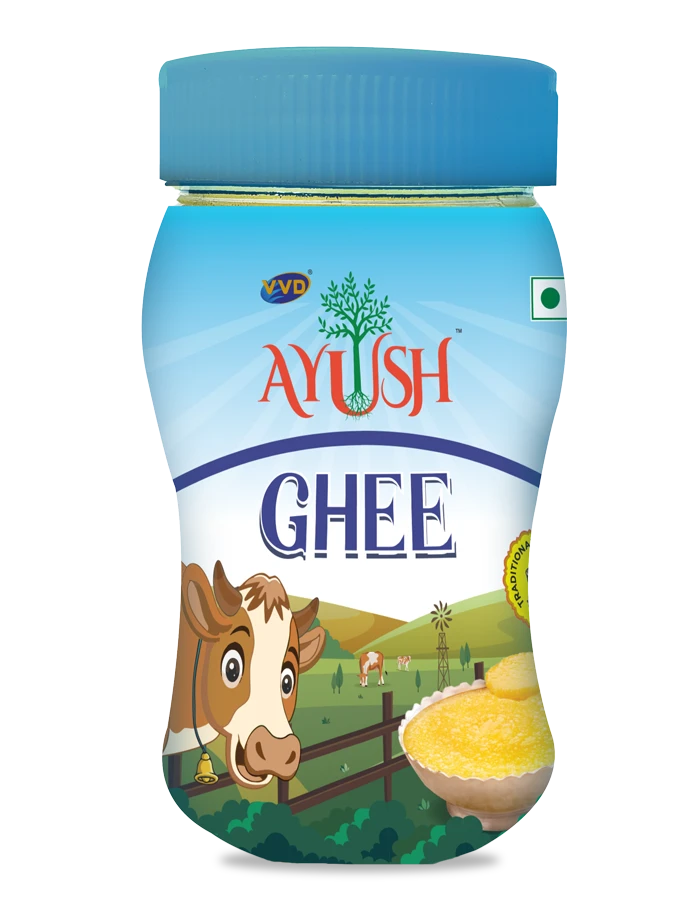
VVD Ayush – 100% Pure Ghee
Why Choosing Pure Ghee Matters?
Not every product sold as ghee delivers the same quality. Differences in milk source, preparation method and processing standards affect:
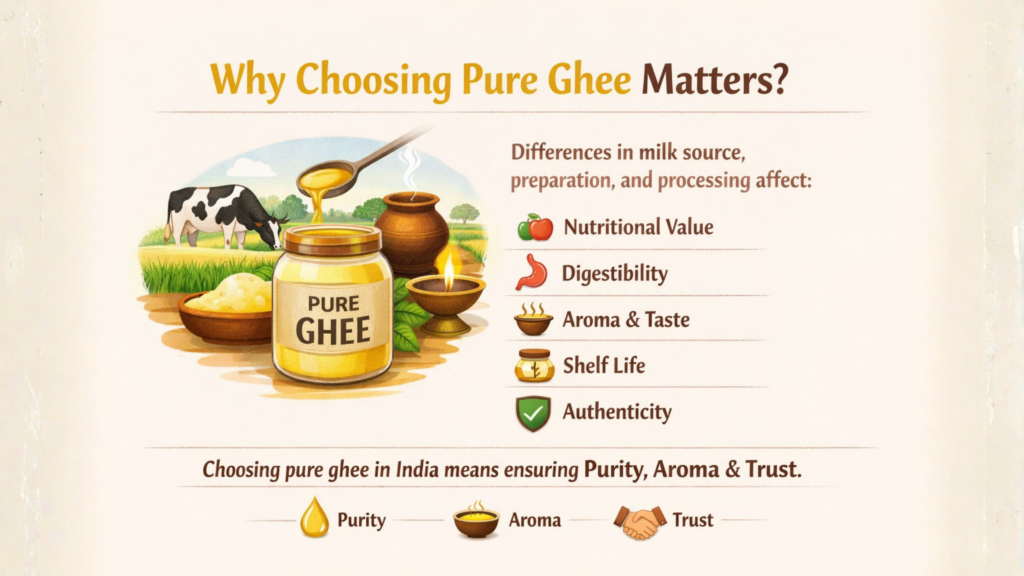
- Nutritional value
- Digestibility
- Aroma and taste
- Shelf life
- Authenticity
Choosing pure ghee in India from a trusted source ensures better flavor and better results in cooking. When people search for best pure cow ghee in India or best desi ghee in India, they are usually looking for three things: purity, aroma and trust.
Types of Ghee Available in India
Understanding types helps you choose which ghee is best for your need.
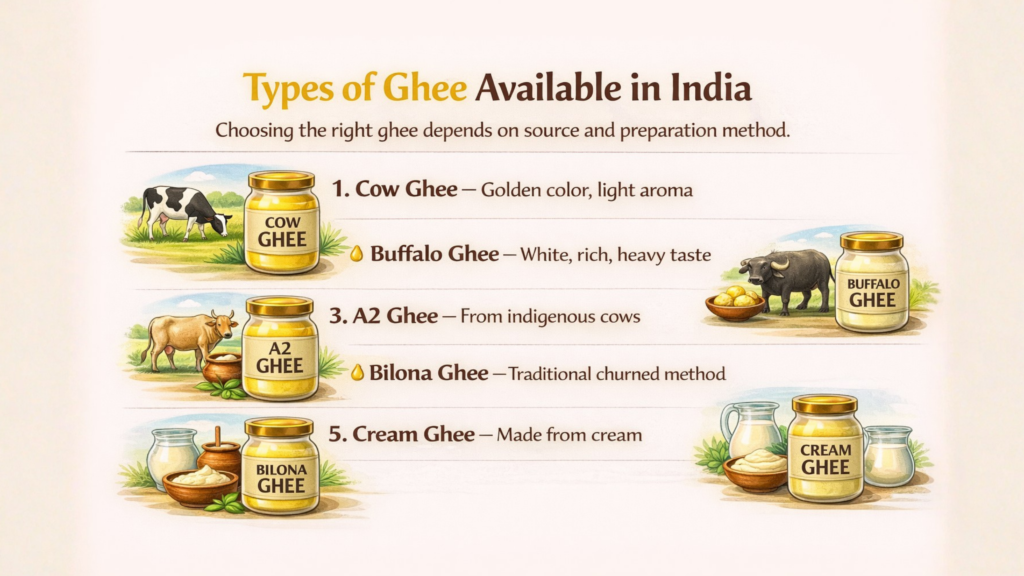
1. Cow ghee
Usually golden in color with lighter aroma. Suitable for daily cooking and wellness use. Often preferred when people search for best cow ghee in India.
2. Buffalo ghee
Creamy white and heavier. Rich taste. Commonly used in sweets and festive dishes.
3. A2 ghee
Made from indigenous cow breeds that produce A2 milk. Considered by many as easier to digest. Often listed among best pure ghee options.
4. Bilona ghee
Traditional method where curd is churned into butter and then clarified into ghee. Strong aroma and slightly grainy texture. Popular among buyers looking for pure desi cow ghee.
5. Cream based ghee
Industrial method made directly from cream. Faster production and widely available.
A1 vs A2 vs Buffalo Ghee Comparison
This comparison helps answer which ghee is best in India for different users.
| Feature | A1 Ghee | A2 Ghee | Buffalo Ghee |
|---|---|---|---|
| Source | Cross-bred cows | Indigenous Indian cows | Buffalo milk |
| Protein | A1 beta-casein | A2 beta-casein | Not A1/A2 specific |
| Digestibility | Moderate | Often easier | Heavier |
| Flavor | Mild | Natural & aromatic | Rich & creamy |
| Ideal Use | Daily cooking | Wellness + cooking | Sweets & deep flavor |
| Color | Light yellow | Golden | Creamy white |
Quick Takeaways:
✔ A2 ghee is often gentler on digestion and richer in traditional aroma.
✔ Buffalo ghee is heavier, ideal for sweets and festive cooking.
✔ A1 ghee works well for everyday use but may not have the same wellness appeal.
How to Identify Pure Ghee
Many buyers search how to identify pure ghee and how to check pure ghee before buying. Use this practical checklist.
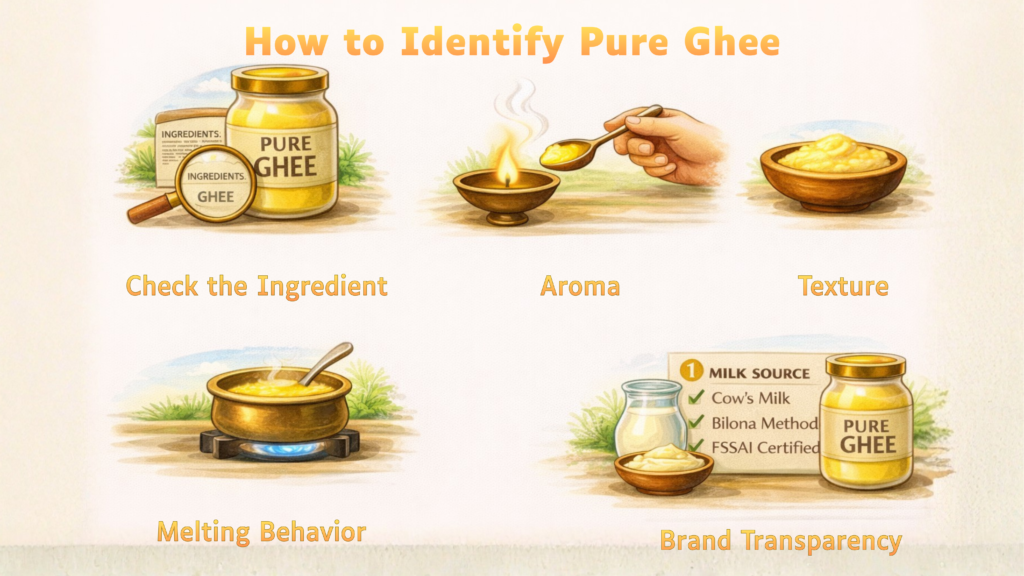
1. Check the ingredient label
It should mention only ghee or milk fat or butter fat. Avoid products with added oils, flavors or preservatives.
2. Check aroma
Pure ghee has a warm nutty dairy aroma. Chemical or flat smell is a warning sign.
3. Check texture
At room temperature pure ghee is smooth or slightly grainy. It should not feel waxy.
4. Check melting behavior
Pure ghee melts evenly and quickly when heated.
5. Check brand transparency
A good pure ghee brand clearly states milk source, process and certifications.
Scent Texture and Lab Test Guide for Pure Ghee
Sensory checks help you judge best pure ghee quality at home.
| Smell | Interpretation |
|---|---|
| Warm, nutty | Pure, well-made ghee |
| Sweet dairy | Well-prepared cow ghee |
| Strong cream | Buffalo ghee |
| Flat / Oily | Poor quality |
| Chemical | Possible adulteration |
Lab quality checks used by manufacturers include fatty acid profile, adulterant detection, moisture level and milk source verification. These tests confirm pure ghee quality scientifically.
Top 5 Best Ghee Brands in India
When buyers search best ghee brand in India, best desi ghee brands in India or best ghee brand, these names appear often.
#1 VVD Ayush Ghee – Premium & Truly Pure
VVD Ayush Ghee tops the list for its authentic aroma, traditional process, and consistent quality — making it ideal for both daily cooking and wellness use.
What makes VVD Ayush special:
- Made from A2 cow milk — natural and wholesome
- Traditional slow churning brings deep flavor
- No preservatives or additives
- Balanced aroma — warm and inviting
- Smooth yet substantial texture
- Great for family meals, Ayurvedic use, and festive cooking
Honestly, once you experience it, you’ll understand why it stands out — rich, genuine, and beautifully crafted.
Best for: Anyone who wants pure, traditional, and high-trust ghee.
#2 Amul Pure Ghee
Amul is one of the most recognized dairy brands in India. It offers stable quality and wide availability.
Suitable for everyday cooking and general household use.
#3 Anveshan A2 Gir Cow Ghee
A premium A2 focused brand known for indigenous cow sourcing and traditional positioning. Often chosen by health focused buyers.
Best for: A2 buyers and health-oriented users.
#4 Patanjali Cow Ghee
Popular traditional brand with large distribution. Considered a budget friendly pure desi ghee option for daily use.
Best for: Ayurveda lovers and regular households.
#5 Desi Vedic A2 Cow Ghee
Artisan positioned brand known for strong flavor and traditional appeal. Often selected by buyers looking for specialty pure ghee in India.
Best for: Traditional taste and festive cooking.
Price Guide for Pure Ghee and Pure Desi Ghee
Buyers often search for pure desi ghee price 1kg, pure cow ghee 1kg price, pure ghee price, and pure ghee rate before making a purchase. Prices mainly depend on the type of milk used and the method of preparation.
Typical market range for a 1 kg pack:
- Pure cow ghee prices usually fall in the mid to premium range, depending on the brand and milk source.
- Pure desi ghee price for 1 kg is generally higher when it is made from A2 milk or prepared using the bilona (traditional) method.
- Premium A2 and traditional ghee products cost more because they require more milk and a slower production process.
Always compare the pack size and effective per-kg rate before buying.
Which Ghee Is Best for Your Use?
| Use Case | Which Ghee Is Best |
|---|---|
| For daily cooking | Choose a trusted pure cow ghee or pure desi cow ghee from a reliable brand |
| For wellness routines | A2-based pure desi ghee is often preferred |
| For sweets and festive dishes | Buffalo ghee or strongly aromatic desi ghee works well |
Storage Tips to Maintain Pure Ghee Quality
To maintain pure ghee quality
- Store in airtight container
- Use only a dry spoon
- Keep away from moisture
- Avoid direct sunlight
- No refrigeration required in most homes
Proper storage keeps best ghee in India products fresh for months.
Common Myths About Pure Ghee
Myth: Darker color means better ghee
Truth: Ghee color depends on the cattle’s feed and breed — not purity.
Myth: Grainy texture means bad ghee
Truth: Traditional pure desi ghee often has a slightly grainy texture, which is normal.
Myth: Higher price always means best pure ghee
Truth: Milk source and preparation method matter more than price alone.
Final Takeaway
Finding the best ghee in India is easier when you know what to check. Focus on milk source, preparation method, aroma, texture, and brand reliability. Whether you are searching for pure cow ghee, pure desi ghee, pure ghee brand options or the best pure ghee for your kitchen, use this guide as your decision framework and buy with confidence.
Frequently Asked Questions
1. How to identify pure ghee quickly
Check label, aroma, melting behavior and brand trust. Real ghee smells nutty and caramel-like, melts quickly, and turns golden when warm. Adulterated ghee often smells like oil and turns dark brown when heated.
2. How to check pure ghee at home
Use smell test, water test, melt test and cooling test. The water test add an olive of ghee in a glass of water. If it floats the ghee is pure. The boil test boil some ghee and cool it in the fridge. If a separate layer appears then the ghee might have been mixed with other oils.
3. Which ghee is best in India
The best ghee brand in India is one that offers clean ingredients, clear sourcing and consistent quality.
4. Cow ghee or Desi ghee, Which is best?
Desi cow ghee is derived from indigenous Indian cow breeds such as Gir, Sahiwal, and Red Sindhi. It is rich in A2 beta-casein protein, which is believed to be healthier and easier to digest than the A1 protein found in foreign cow ghee.
VVD Ayush – 100% Pure Ghee