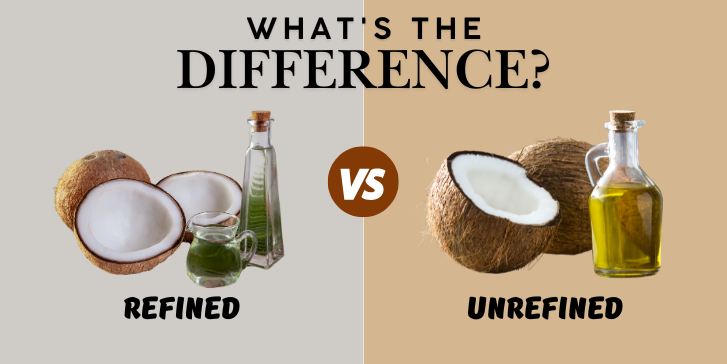
Coconut oil has become a staple in kitchens, beauty routines, and wellness lifestyles worldwide. But when choosing between refined vs unrefined coconut oil, many people get confused.
Both types offer unique advantages, yet the difference between refined and unrefined coconut oil can impact your cooking, skin care, and even dietary goals.
This guide breaks down what refined coconut oil is, how unrefined coconut oil is made, and which one suits your daily use.
What Is Refined Coconut Oil?
Refined coconut oil is a processed form of coconut oil made from dried coconut meat known as copra. Unlike unrefined coconut oil, which is extracted from fresh coconuts, refined coconut oil goes through purification steps to remove impurities, odor, and flavor. This results in a neutral-tasting, mild-smelling oil that is highly versatile in cooking and baking.
During refining, the oil is typically:
- Filtered to remove contaminants
- Deodorized using steam to eliminate the strong coconut aroma
- Bleached (clay-treated) to improve clarity and purity
Because of this process, refined coconut oil has:
- Higher smoke point (ideal for frying and high-heat cooking)
- Longer shelf life
- Neutral flavor, making it suitable for recipes where coconut taste is not desired
In the market, refined coconut oil may also be labeled as:
- RBD Coconut Oil (Refined, Bleached & Deodorized)
- Pure Coconut Oil
- Processed Coconut Oil
It remains a popular choice for commercial kitchens and home cooking due to its stability and versatility.
Buy VVD Pure Coconut Hair Oil
From Official VVD’s Store
Production of Refined and Unrefined Coconut Oil
Refined Coconut Oil (RBD Process)
- Made from dried copra
- Steam-treated to remove odor
- Filtered to eliminate impurities
- Higher smoke point (400–450°F / 204–232°C)
- Longer shelf life due to reduced moisture and impurities
Unrefined Coconut Oil (Virgin or Cold-Pressed)
- Extracted from fresh coconut meat
- Minimal processing
- Retains natural coconut aroma and flavor
- Contains more phytonutrients, polyphenols, and antioxidants
- Lower smoke point (350°F / 175°C) but excellent for medium-heat cooking and beauty use
Unrefined coconut oil is also commonly known as virgin coconut oil, cold-pressed coconut oil, or natural coconut oil.
Health Benefits of Coconut Oil
Both refined and unrefined coconut oils contain:
- Medium-chain triglycerides (MCTs) that support quick energy
- Lauric acid, known for antimicrobial properties
- Healthy fats beneficial for metabolism and hormonal function
Unrefined coconut oil retains slightly more antioxidants and bioactive compounds because it undergoes minimal processing. However, refined coconut oil is still safe, nutritious, and suitable for daily cooking.
Refined vs Unrefined Coconut Oil: Which One Should You Choose?
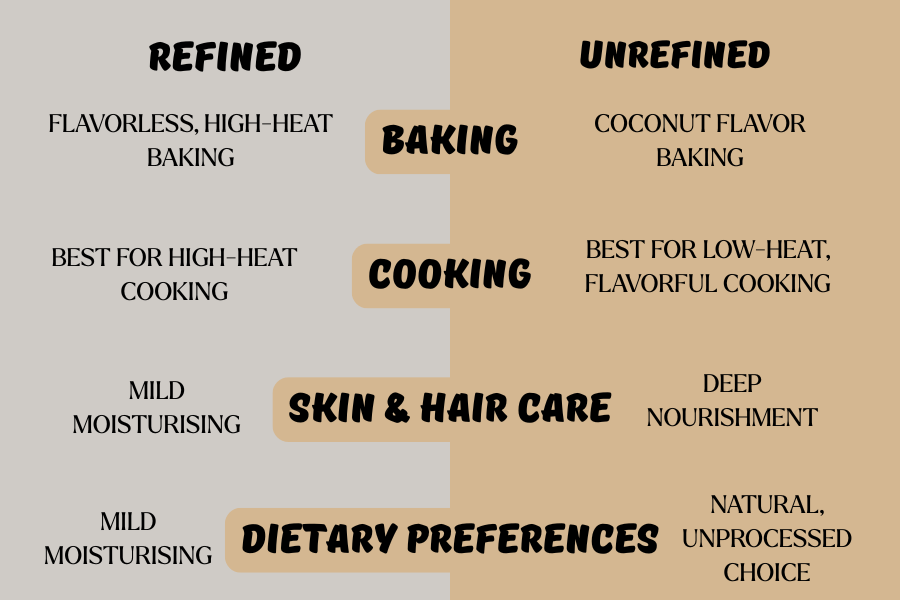
Choose unrefined (virgin/cold-pressed) for maximum nutrients, strong coconut flavor, and skincare/low-heat uses; choose refined for high-heat cooking and baking where a neutral taste/smell is needed, as refining strips flavor but adds heat stability. Unrefined retains antioxidants, while refined is cheaper and odorless but lacks therapeutic benefits.
1. Baking
Refined Coconut Oil
- Best for cakes, cookies, breads
- Neutral flavor that won’t alter the taste
- Stable at high temperatures
- Preferred in professional baking
Unrefined Coconut Oil
- Adds a mild coconut taste (good for tropical recipes)
- Suitable for muffins, pancakes, desserts
- Not ideal when you want flavorless fat
2. Cooking
Refined Coconut Oil
- Perfect for deep-frying, sautéing, stir-frying
- Higher smoke point prevents burning
- Ideal for Indian, Asian, and everyday recipes
Unrefined Coconut Oil
- Works best for low to medium heat
- Enhances flavor in curries, smoothies, and traditional dishes
- Contains natural nutrients that degrade at very high heat
3. Skin & Hair Care
Refined Coconut Oil
- Mild and processed
- Suitable for sensitive skin if someone dislikes strong scent
- Lightweight for basic moisturization
Unrefined Coconut Oil
- Rich in natural antioxidants
- Nourishes dry hair and scalp
- Ideal for oil massage, deep conditioning, and lip/skin care
- Better choice for Ayurvedic and holistic beauty routines
4. Dietary Preferences
Refined Coconut Oil
- Good for people who want neutral taste
- Suitable for frying recipes in keto and low-carb diets
Unrefined Coconut Oil
- Preferred in natural, raw, or clean-eating diets
- Favored in keto, paleo, and Ayurvedic lifestyles
- Minimally processed with natural compounds intact
Quick Summary Table
| Use Case | Best Choice | Why? |
|---|---|---|
| Baking | Refined | Neutral flavor, no aroma |
| High-heat cooking | Refined | Higher smoke point |
| Low/medium-heat cooking | Both | Depends on flavor preference |
| Skin & Hair Care | Unrefined | Gentler, nutrient-rich, natural |
| Keto / Natural Diets | Unrefined | Minimally processed, retains natural compounds |
Conclusion
Choosing between refined or unrefined coconut oil depends entirely on your needs. If you prefer a neutral taste and often cook at high temperatures, refined coconut oil is the smarter choice. But if you value natural aroma, antioxidants, and holistic health benefits, unrefined coconut oil (virgin/cold-pressed) is the superior option.
Understanding what’s the difference between refined and unrefined coconut oil helps you make informed decisions for your kitchen, beauty care, and lifestyle. Ultimately, both oils have their unique strengths and the best choice is the one that fits your cooking style, dietary goals, and personal preferences.