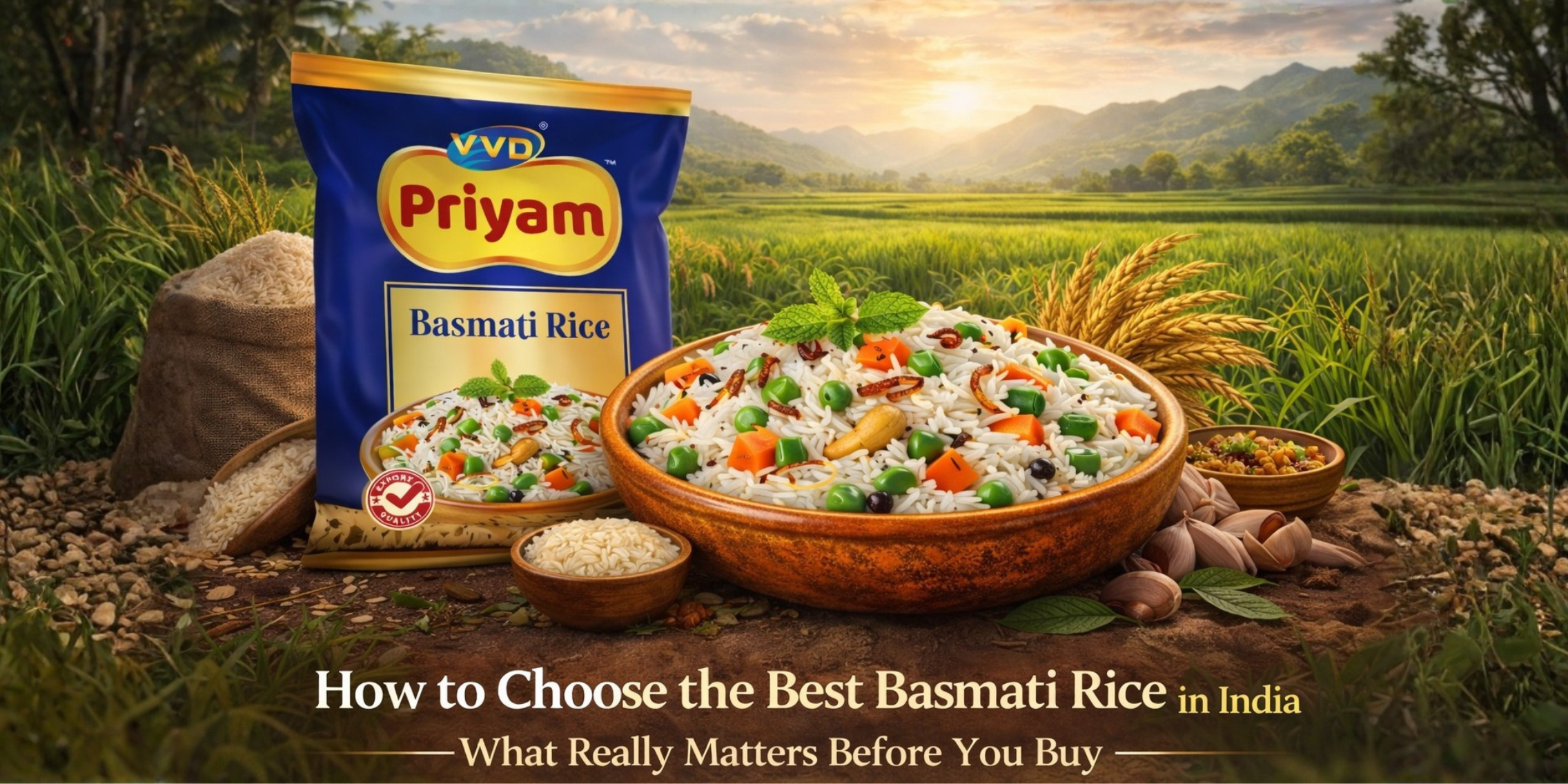
In 2026, Picking the best basmati rice brand in India involves more than long grains or a good aroma. The true characteristics of premium basmati rice are ageing (12–24 months), grain elongation when cooked, a subtle natural aroma and as it’s harvested in limited quantities worldwide originating only from traditional basmati-growing regions.
Whether you’re making biryani or throwing together your nightly dinner, for fluffy rice that’s not sticky, this guide will show you what to look for before buying.
How to Choose the Best Basmati Rice in India (5 Expert Checks)
- Choose naturally aged basmati rice (12–24 months)
- Check elongation after cooking, not raw grain length
- Look for mild, natural nutty aroma
- Ensure minimal broken grains (below 5%)
- Select brands with transparent sourcing and ageing process

Types of Basmati Rice Available in India
Understanding the type of basmati rice helps you choose the right one for your cooking style.
Traditional Basmati Rice
- Medium-long grains
- Rich aroma
- Ideal for daily meals
1121 Extra Long Grain Basmati
- 8.2mm+
- Exceptional elongation
- Best for: Biryani, Special Occasions
Pusa Basmati
- Hybrid variety
- Good aroma
- Affordable option
Brown Basmati Rice
- Less processed
- Higher Fiber
- Health-conscious consumers like this
Sella (Parboiled)
- Partially boiled before milling
- Firmer texture
- Popular for bulk cooking
Don’t Judge Basmati Rice Only by Grain Length
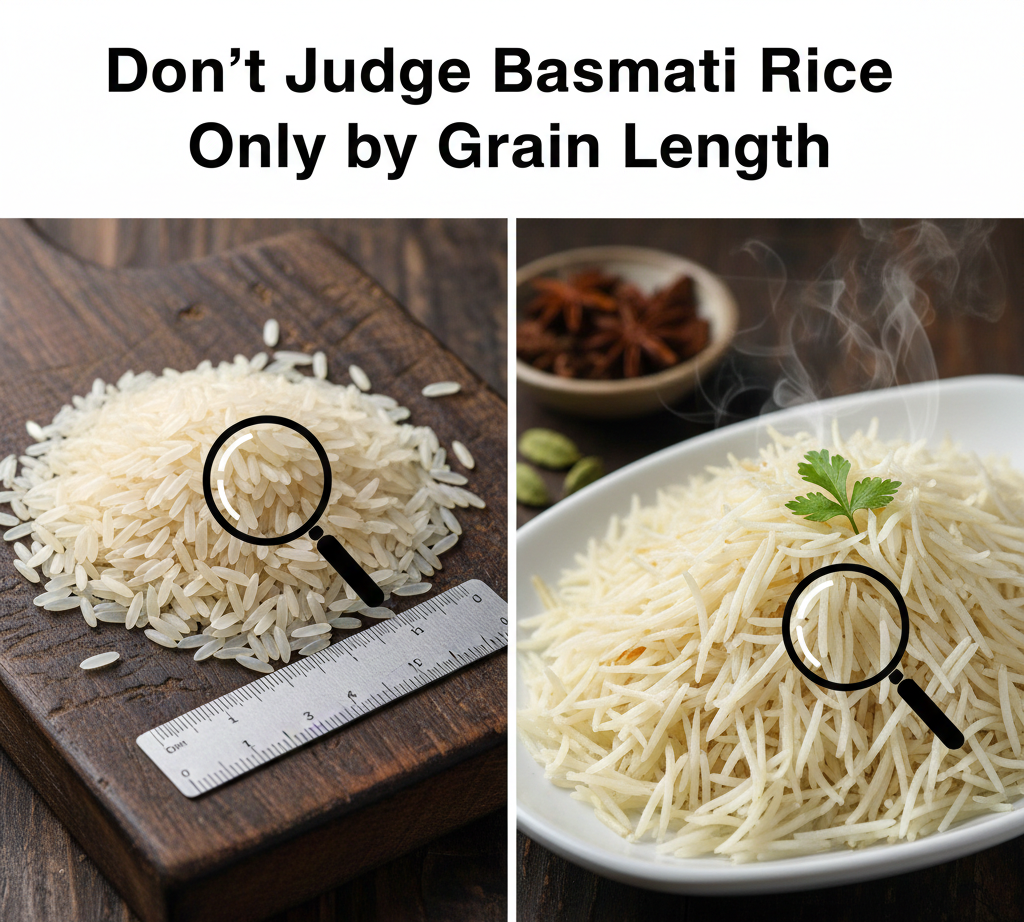
Many buyers assume longer grains automatically mean better basmati rice. That’s a common myth. Professional rice quality assessment always includes a cooking test to evaluate grain elongation, separation, and texture.
What truly matters:
- Long, slender, uniform grains
- Elongation after cooking, not widening
- Cooked rice should be separate, fluffy, and elegant
Low‑quality rice can look long before cooking, but break or swell sideways when cooked. Premium basmati proves its quality only after cooking, especially in biryani and pulao.
Premium basmati rice elongates up to twice its raw length after cooking without becoming sticky or widening
How to Identify Original Basmati Rice at Home
Most buyers also have difficulty in recognizing real basmati rice. Here are simple checks
Water Test
Wash the rice and add water to it, let it soak for 20-30 mins. Good basmati sticks together, but premium rice stays firm and individual.
Cooking Test
Cook a small portion: You want grains or pieces of pasta to lengthen, not tilt in girth. The rice should be fluffy and not sticky.
Aroma Check
Authentic basmati has: Mild nutty fragrance , No artificial perfume like smell
Grain Inspection
- Uniform grain size
- Minimal broken pieces
- Sierra doesn’t fall out the bottom of the pack
Aged Basmati Rice Is Better — But Only When Aged Naturally
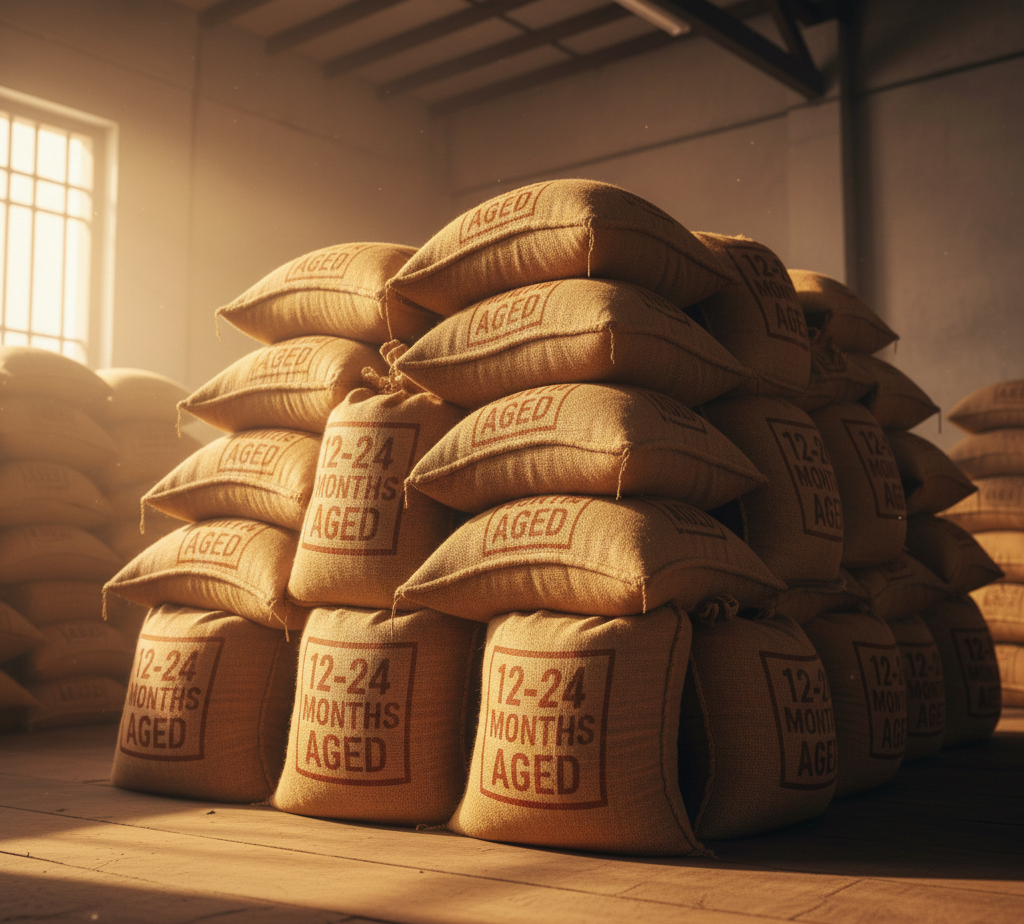
Ageing is often misunderstood when it comes to basmati rice. Well-aged basmati rice typically shows 15–20% better grain separation compared to freshly harvested rice.
Why ageing matters:
- Fresh rice has high moisture content
- It releases excess starch during cooking
- This results in a sticky and uneven texture
Naturally aged basmati rice (12–24 months):
- Lower moisture levels
- Better grain elongation
- Richer, natural aroma
- More consistent cooking results
Ageing alone doesn’t guarantee quality. Poor storage, excessive polishing, or chemical treatment can ruin even well-aged rice. Proper sourcing and handling are crucial.
👉 Naturally aged basmati rice has lower moisture content, improving grain separation by nearly 15–20% compared to freshly harvested rice.
Aroma Should Be Mild, Natural, and Long-Lasting
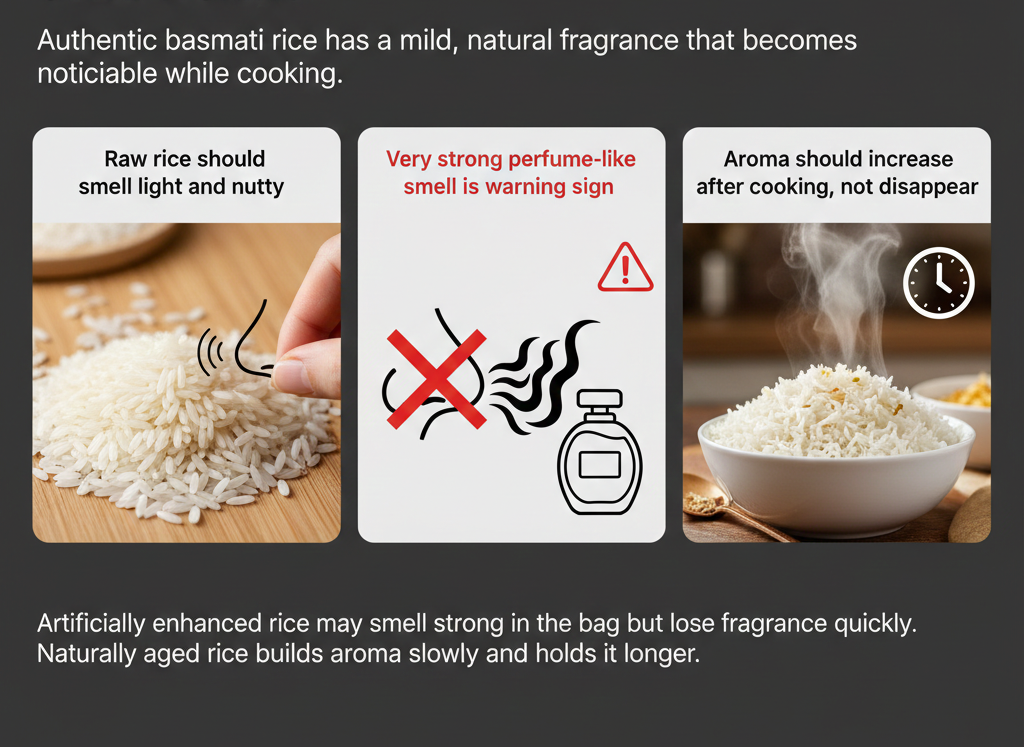
Authentic basmati rice never has an overpowering smell.
How to recognise genuine basmati aroma:
- Raw rice has a subtle, nutty fragrance
- No artificial or perfume-like scent
- Aroma becomes stronger during cooking, not weaker
Rice with artificial fragrance may smell strong in the packet, but quickly loses aroma. Naturally aged basmati develops fragrance slowly and retains it longer.
Check the Percentage of Broken Grains
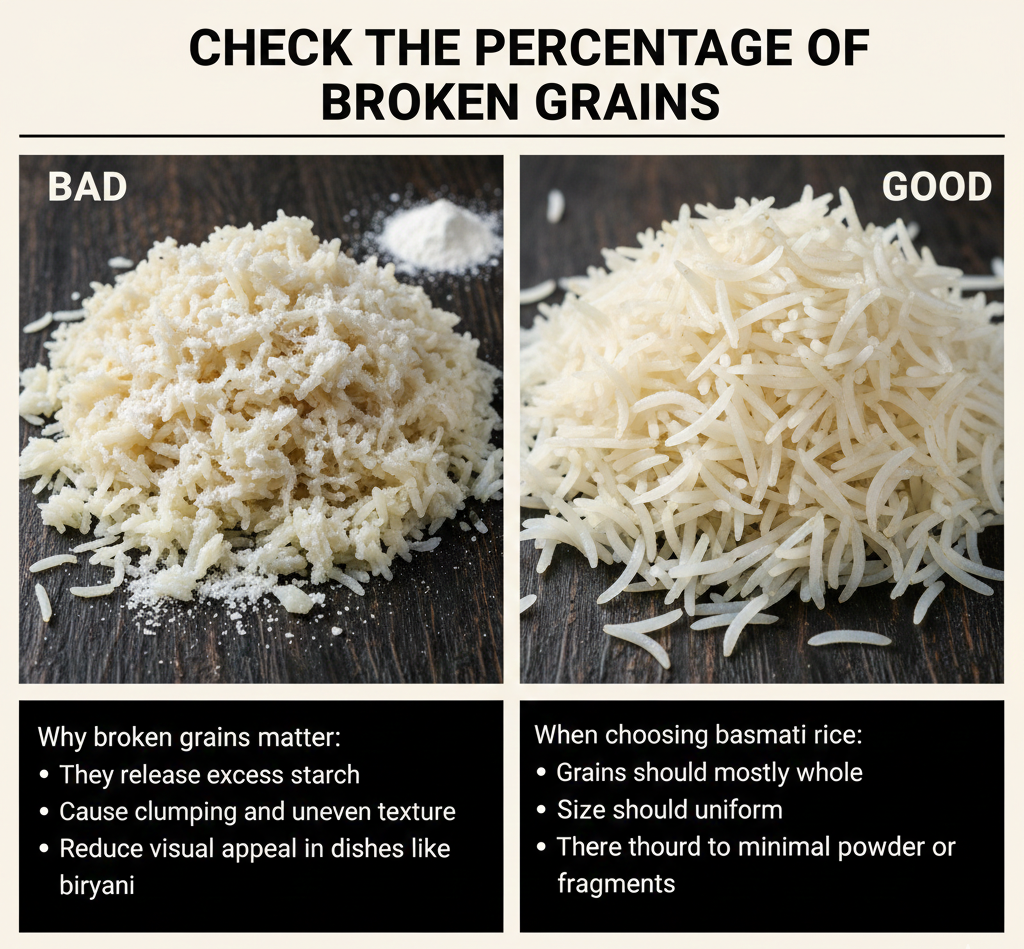
One major reason basmati rice fails is a high percentage of broken grains.
Why broken grains are a problem:
- They release excess starch
- Cause clumping and stickiness
- Ruin both texture and appearance
When choosing basmati rice:
- Grains should be mostly whole
- Size should be uniform
- There should be minimal powder or fragments
This single factor often separates premium basmati rice from average quality rice.
Choose the Right Basmati Rice for Your Cooking Style
Not all basmati rice is meant for the same dishes.
Traditional Basmati Rice
- Balanced grain length
- Rich aroma
- Suitable for daily Indian meals
1121 Long Grain Basmati Rice
- Extra-long grains
- Exceptional elongation
- Best for biryani and special occasions
Selecting rice based on how you cook gives far better results than choosing based on price or packaging.
Brand Matters — But Process Matters More
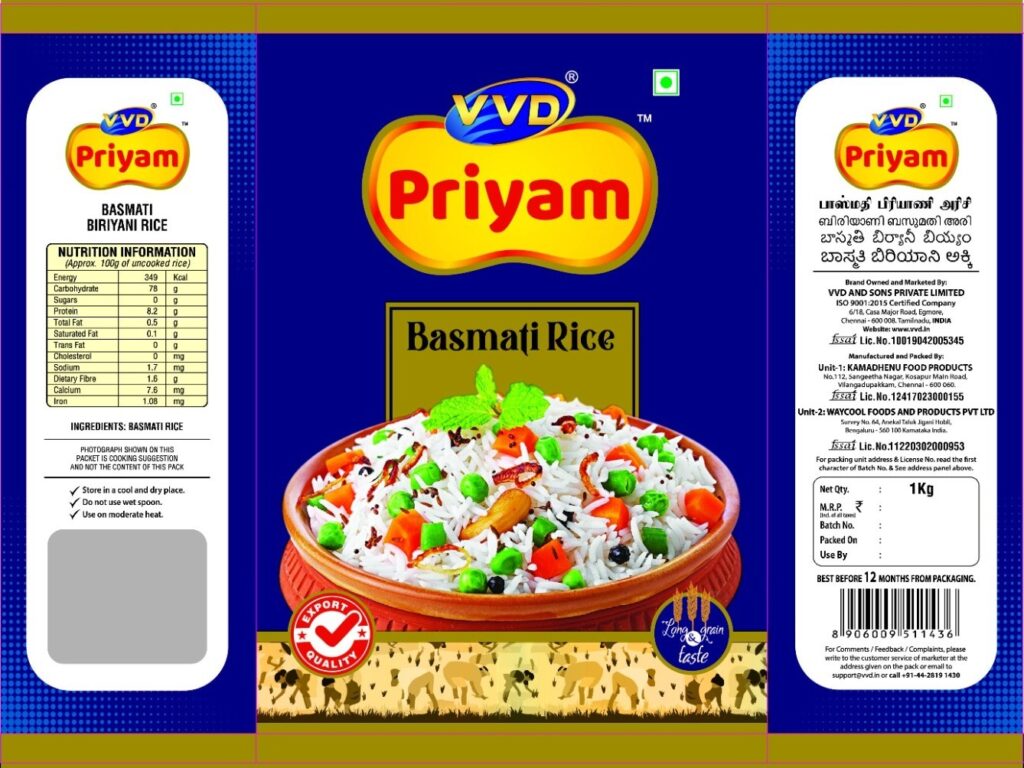
Brands like VVD Priyam Basmati Rice prioritize the careful handling of aged grains, maintaining grain integrity, and ensuring hygienic processing. These method-based approaches focus on guaranteeing consistent cooking quality in each lot or batch, rather than relying solely on branding and packaging.
A reliable basmati rice brand should:
- Source rice from traditional basmati-growing regions
- Follow natural ageing methods
- Avoid excessive chemical polishing
- Maintain consistent quality across batches
Brands like VVD Basmati Rice focus on grain integrity, hygiene, and controlled ageing, ensuring dependable results every time you cook.
Common Mistakes Indians Make While Choosing Basmati Rice
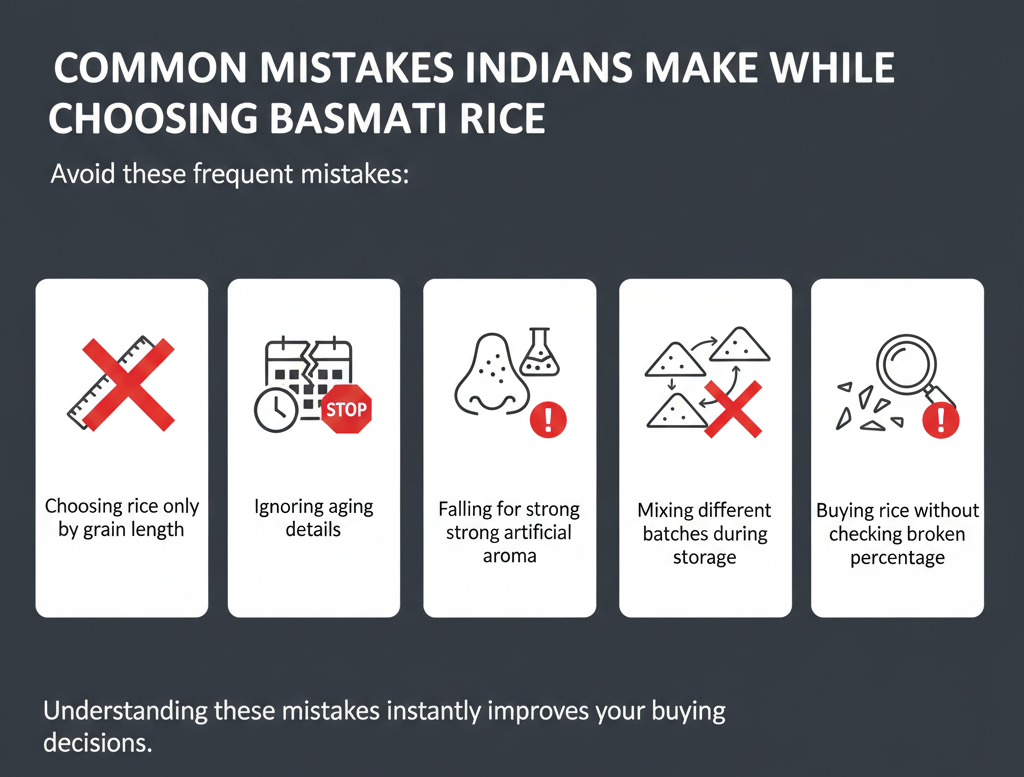
Avoid these frequent mistakes:
- Choosing rice only by grain length
- Ignoring ageing details
- Falling for artificial aroma
- Mixing different batches during storage
- Not checking the broken grain percentage
Correcting these mistakes can dramatically improve cooking results.
Conclusion
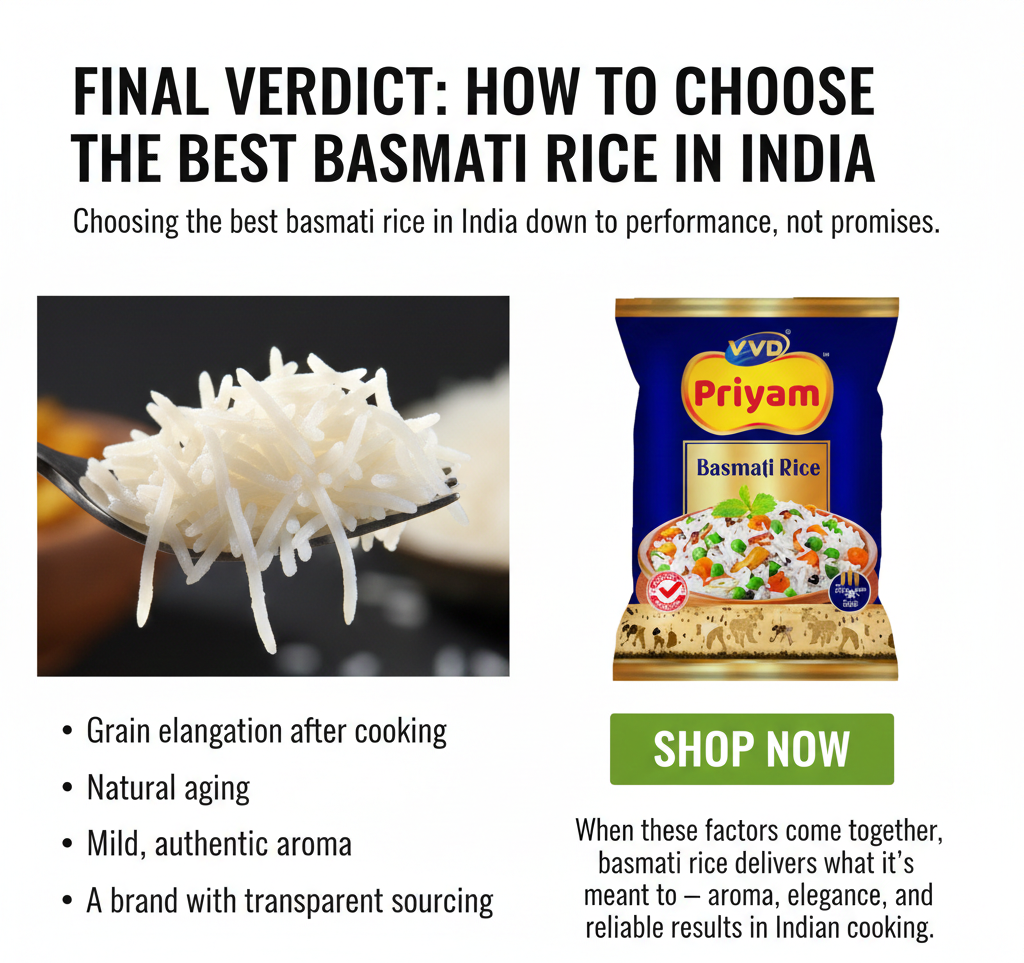
Choosing the best basmati rice in India comes down to performance, not promises.
Focus on:
- Grain elongation after cooking
- Natural aging
- Mild, authentic aroma
- Minimal broken grains
- A brand with transparent sourcing
When these elements come together, basmati rice delivers exactly what it should—aroma, elegance, and consistency in Indian cooking.
About the Experts Behind This Guide
This guide is a result of years of research and hands on experience at our Indian households by the VVD Foods quality and sourcing team that sorts, natural ages and processes basmati rice. The advice is derived from actual cooking performance, grain grading and sourcing standards not marketing hocus-pocus
👉 Want deeper insights on basmati rice benefits, varieties, and cooking secrets?
[Read the Ultimate Guide to Basmati Rice]
Frequently Asked Questions (FAQs)
Best basmati rice in India is selected on the basis of its cooking performance not appearance. You want rice that lends the ability to elongate when cooked; is naturally aged (not less than 12–24 months), has a mild and natural aroma, almost no broken grains and comes from a company whose sourcing / processing method are clear Transparency. Learn more in our detailed guide on [basmati rice quality factors]
Yes naturally aged basmati rice is best for Indian cooking. Aging for 12–24 months decreases moisture content, restricts overabundant starch release, heightens potency of scent and allows for the rice to cook evenly with fluffy, singularly independent grains.
Aged long-grain basmati rice, especially 1121 varieties, is best for biryani in India. Its exceptional grain elongation, rich aroma, and ability to remain separate after cooking help achieve authentic, restaurant-style biryani results.
Real basmati rice will tell you by its cookery & natural fragrance. It is long, thin rice with a mild nutty aroma, long (but not too firm) elongation and you can verify it comes from documented basmati growing areas in India.