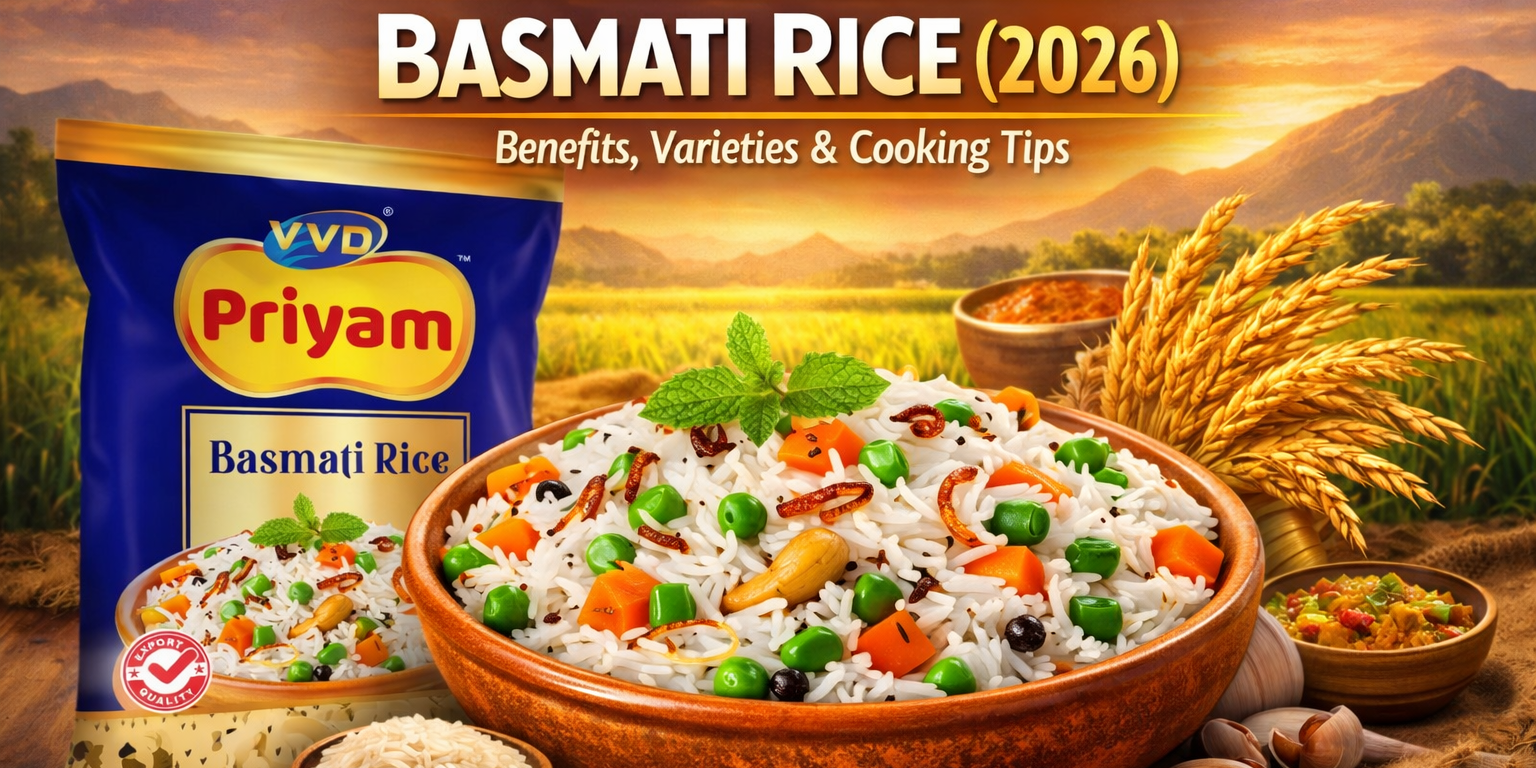
Why Basmati Rice Is More Than Just Rice
Basmati rice isn’t merely a kitchen essential; it’s a symbol of aroma, purity, heritage, and unmatched quality. Famous for its long, slender grains and signature fragrance, rice has been treasured for centuries in Indian households and around the world. With growing health awareness and the pursuit of high-quality ingredients, the demand for authentic basmati rice continues to rise.
In this guide, you’ll discover everything about basmati rice from its origins and health benefits to expert cooking methods, varieties, and tips on choosing the perfect one for your home. You’ll also learn why VVD Basmati Rice is a trusted choice among families who value consistency, purity, and exceptional taste.
What Is Basmati Rice?
Basmati rice is a long-grain, aromatic rice variety traditionally cultivated in the fertile lands of India and the surrounding subcontinent. The name “Basmati” comes from Sanskrit, meaning “Fragrant” perfectly describing the natural aroma it releases when cooked.
Key Features of Authentic Basmati Rice
- Naturally aromatic, thanks to the compound 2-acetyl-1-pyrroline
- Long, slender grains that lengthen beautifully after cooking
- Light, fluffy, and non-sticky texture
- Lower glycemic index than regular white rice
True basmati rice gets better with age, deepening in aroma, strength, and cooking performance.
Basmati Rice vs Other Rice Varieties
Many wonder: What makes basmati rice different from regular rice?
| Feature | Basmati Rice | Regular White Rice |
| Aroma | Naturally aromatic | Neutral |
| Grain Length | Long & elongates | Short/medium |
| Texture | Fluffy & separate | Often sticky |
| Glycemic Index | Lower | Higher |
| Best For | Biryani, pulao, special dishes | Everyday meals |
Basmati Rice vs Jasmine Rice
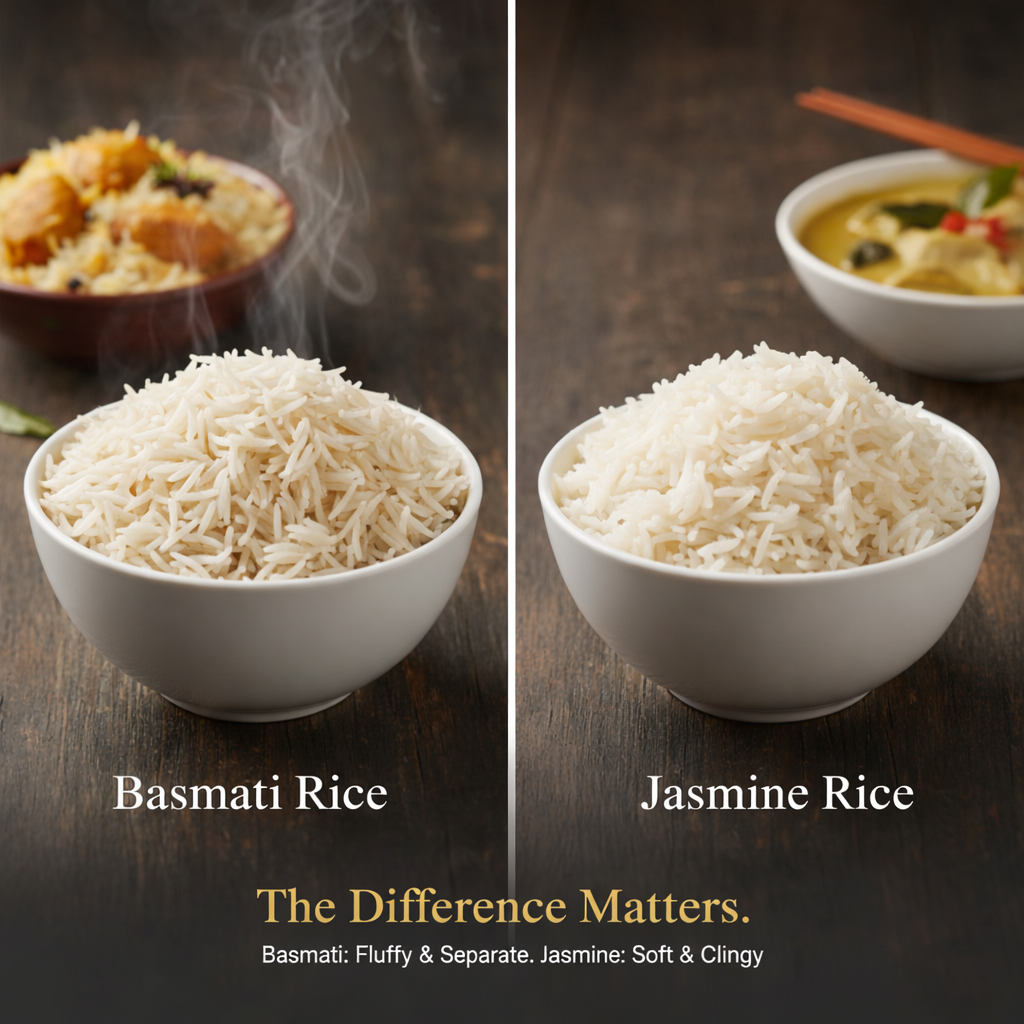
- Basmati is fluffier and less sticky
- Jasmine rice is softer and slightly clingy
- Basmati is ideal for Indian, Middle Eastern, and Persian cuisines
If you appreciate aroma, elegance, and balanced nutrition, basmati rice is the premium choice.
Health Benefits of Basmati Rice
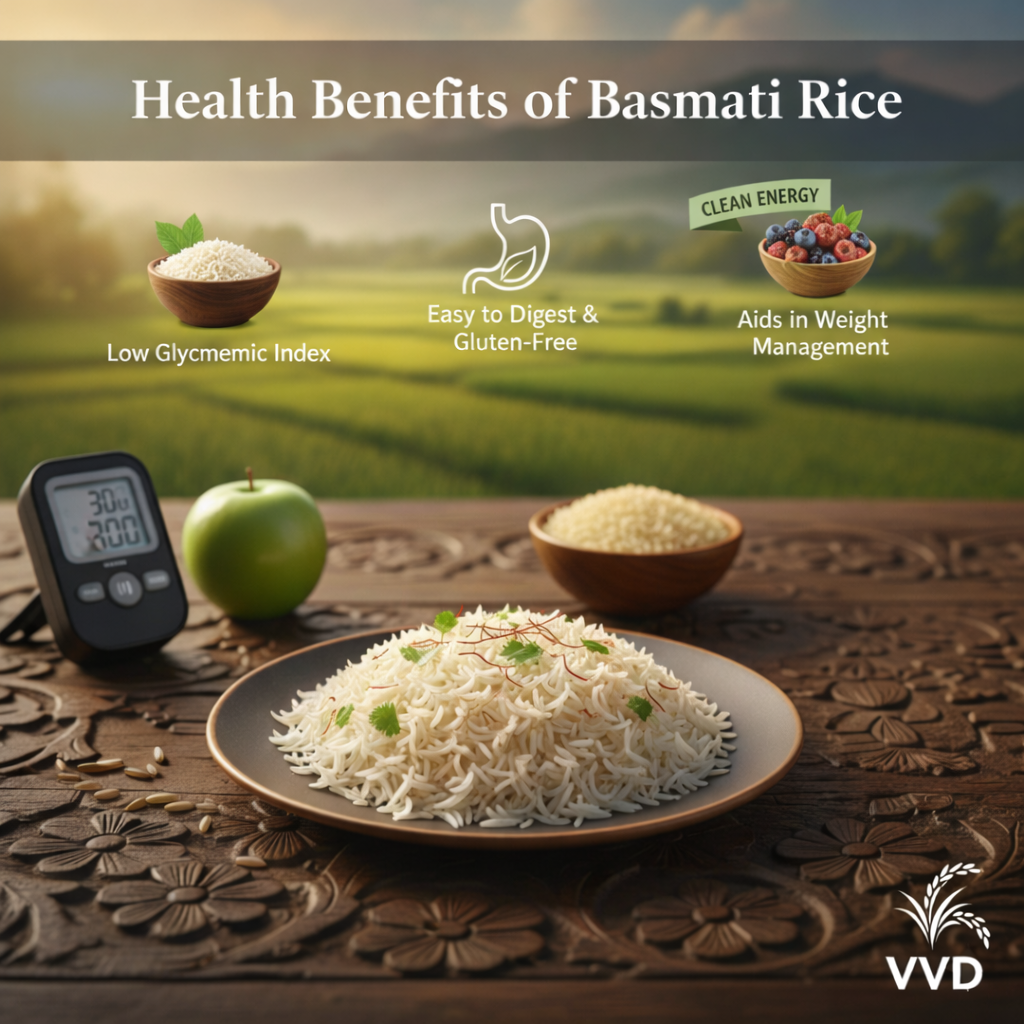
- Low Glycemic Index
Basmati rice releases energy gradually, making it an ideal choice for individuals managing blood sugar levels. - Easy to Digest & Gluten-Free
Its light texture is gentle on the stomach and suitable for gluten-sensitive diets. - Aids in Weight Management
Its aroma and satisfying texture mean smaller portions can still keep you full. - Clean Source of Energy
Packed with carbohydrates, basmati fuels your body without adding excess fat or sodium.
How to Cook Perfect Basmati Rice Every Time
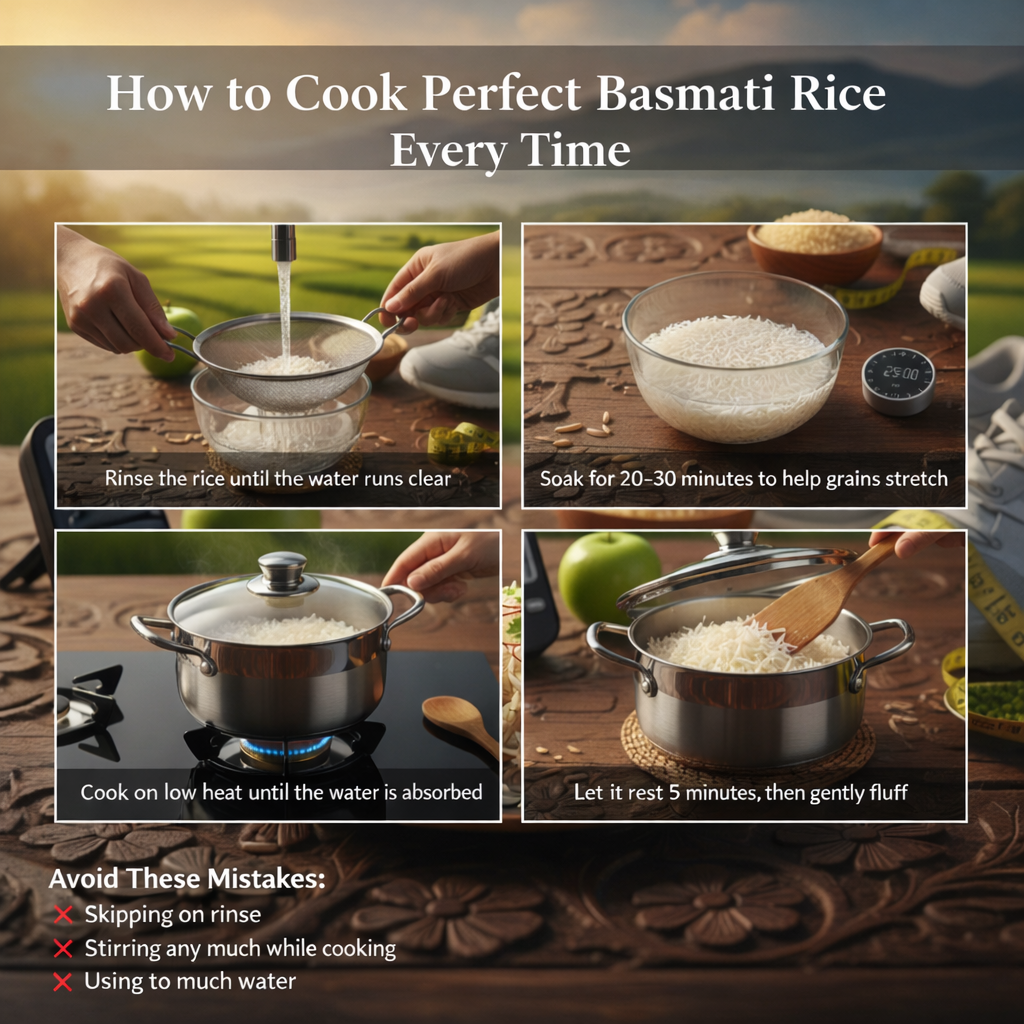
Step by Step Method
- Rinse the rice until the water runs clear.
- Soak for 20–30 minutes to help grains stretch.
- Use a 1:1.5–2 ratio of rice to water.
- Cook on low heat until the water is absorbed.
- Let it rest for 5 minutes, then gently fluff.
Avoid These Mistakes
- Skipping the rinse
- Stirring too much while cooking
- Using too much water
For perfect results every time, choose high-quality rice like VVD Basmati Rice
Popular Basmati Rice Varieties
Traditional Basmati Rice
- Deep aroma
- Slightly shorter grains
- Great for classic recipes
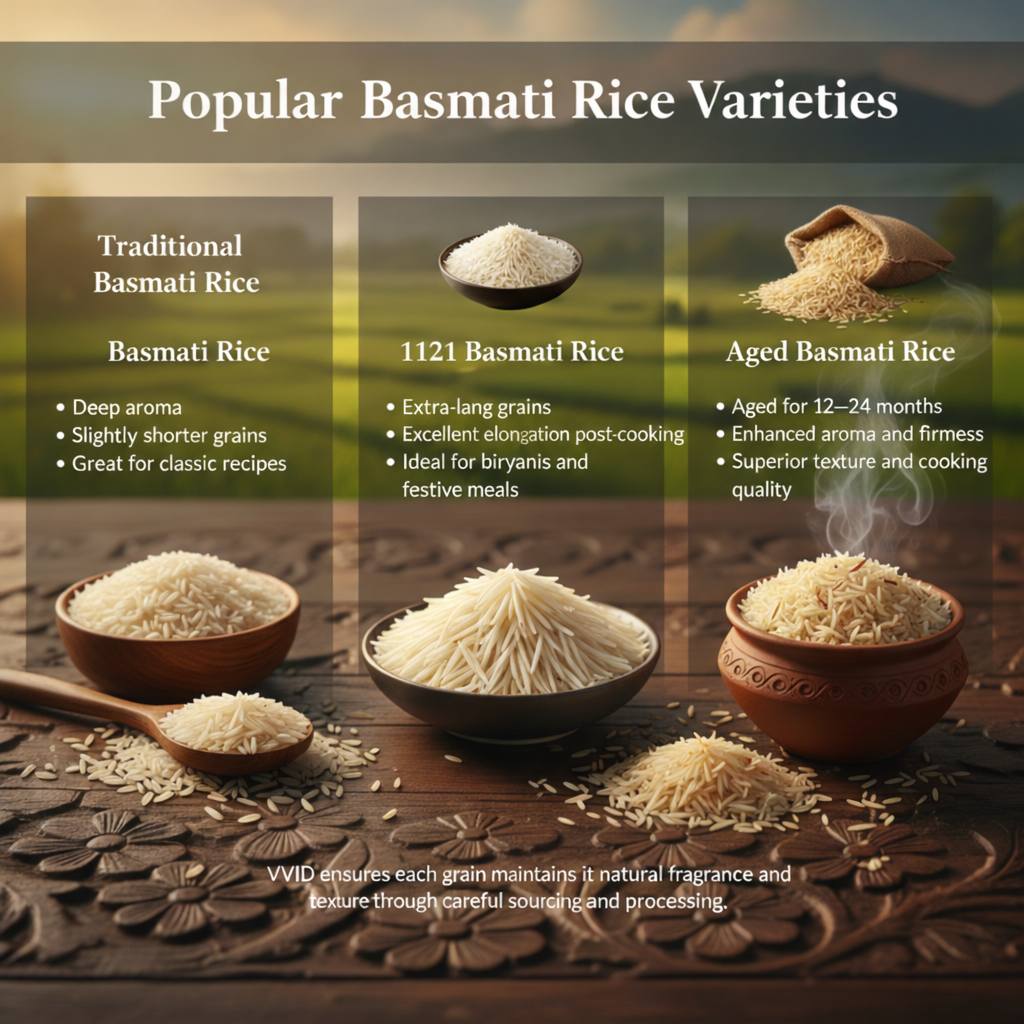
1121 Basmati Rice
- Extra-long grains
- Excellent elongation after cooking
- Perfect for biryanis and festive dishes
Aged Basmati Rice
- Aged for 12–24 months
- Enhanced aroma and firmness
- Superior texture and cooking quality
VVD ensures each grain maintains its natural fragrance and texture through careful sourcing and processing.
Best Dishes to Make with Basmati Rice

Basmati rice brings out the best in every recipe
- Classic Chicken or Mutton Biryani
- Paneer & Vegetable Pulao
- Jeera Rice
- Persian Pilaf
- Fusion rice bowls and healthy meals
Its ability to stay separate while absorbing flavours makes it a chef’s favourite worldwide.
How to Choose the Best Basmati Rice
Selecting the proper rice is about more than just length or aroma of the grain. At VVD, it comes down to how the rice is grown, aged, processed, and delivered, so we can guarantee an authentic meal that’s aromatic and consistent. Here’s how to recognise a real premium rice, which is the standard for VVD Basmati Rice.
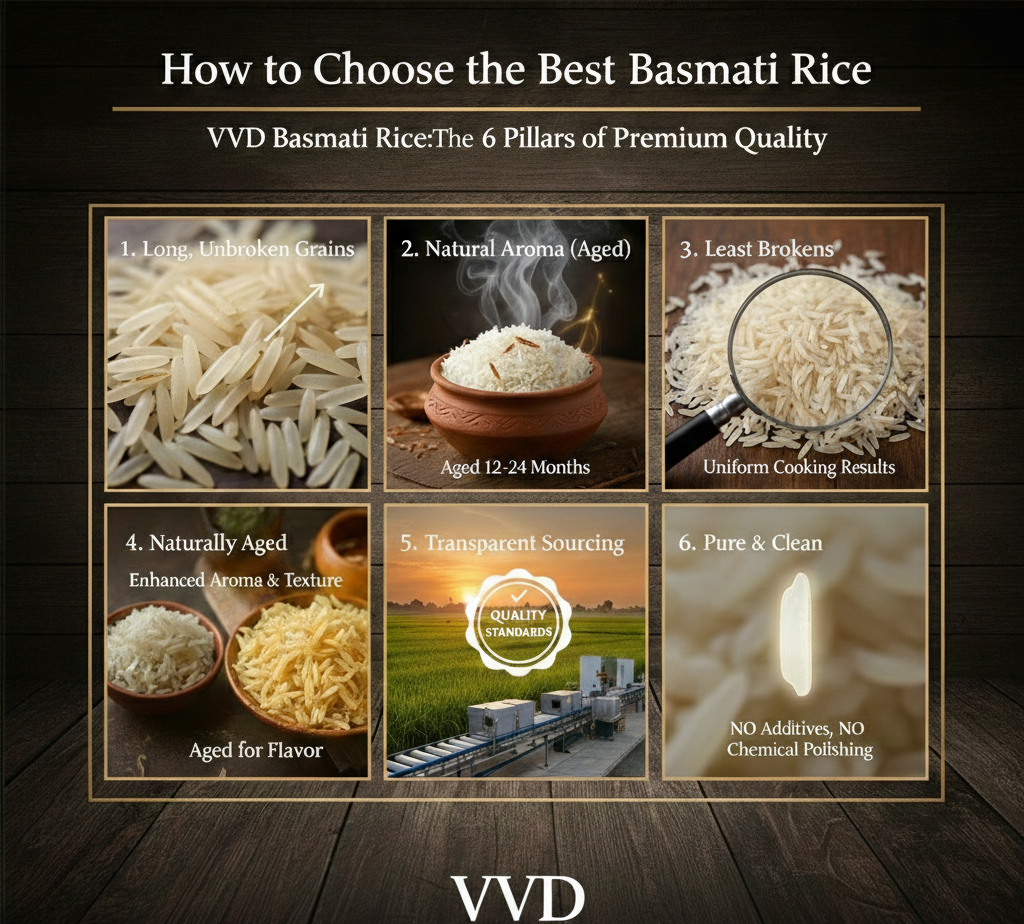
1. Naturally Long, Unbroken Grains
True Basmati rice is characterised by its long, thin grains, which do not stick together while cooking.
With VVD Basmati Rice
- Grains are sorted and dressed evenly to give a consistent mouth feel
- There is no cracking with gentle milling
- Unlike other types of rice, when cooked, these grains elongate instead of swelling and increasing in width; they are soft and stick together
Why does VVD focus on this
Unbroken grains show care in handling and higher quality of sourcing, which actually affects the texture, look and mouthfeel of dishes like biryani and pulao.
2. No Artificial Forward Flavors Natural Aroma From Traditional Ageing
Real Basmati rice should have a pleasant aroma, which it only gets by ageing properly without manmade perfumes and properties!
VVD Basmati Rice
- Naturally aged to enhance the aroma and cooking quality
- Has a light and pleasant scent that becomes stronger after cooking
- Free from artificial fragrance enhancers that tend to fade fast
Why this matters
Aged rice tastes better, smells genuine, and chews more pleasantly. It’s tastier and safer
3. Least Broken for Uniform Cooking
The percentage of broken grains is a major quality criterion for Basmati rice.
VVD Ensures
- Strict selection and quality control
- Uniform grain size for even water absorption
- Even cooking results every time
Result
Tender, fluffy individual grains with supple texture, not clumps or tough overcooked patches.
4. Naturally Aged for Better Taste and Texture
Rice that has been newly harvested may look nice, but does not cook well. VVD gives preference to naturally aged Basmati rice for the best results.
Benefits of VVD’s ageing process
- Low loss of starch during cooking
- Better grain elongation
- Enhanced aroma and flavour
That is whyVVD Basmati Rice gives you restaurant-like food even at home
5. Trusted Brand Practices & Transparent Sourcing
The quality of Basmati rice is also very much linked to where and how it is produced.
VVD Basmati Rice is
- Procured from traditional Basmati growing regions
- Processed hygienically using food-grade methods
- Free from unnecessary chemical polishing
- Supported by clearly defined quality standards
Why brand credibility matters
A reliable brand guarantees consistency, purity, and safety with every pack, not just your first purchase.
6. Pure Clean Rice Without Additives or Toxins
No premium Basmati should ever use artificial whitening or chemical treatment processes.
VVD follows
- Minimal polishing to maintain a natural grain appearance
- Clean processing practices
- Packaging that keeps the product fresh and aromatic
This means rice that is easy to digest, safe for daily consumption, and naturally flavorful
Why VVD Basmati Rice?
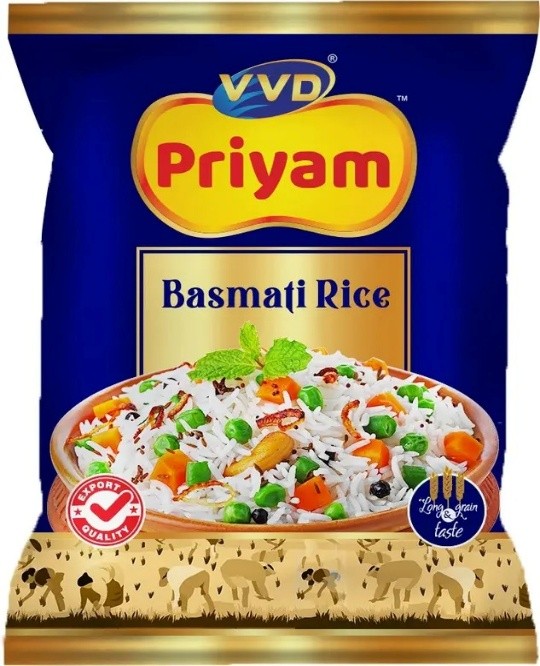
- Carefully chosen premium grains
- Consistent aroma and grain size
- Hygienic processing
- Trusted by homes and chefs alike
VVD’s commitment to quality first sourcing ensures perfect results, every time.
Storage Tips for Freshness
- Store in an airtight container
- Keep away from moisture and sunlight
- Don’t mix old and new batches
Proper storage keeps the fragrance and quality intact.
Why the Right Basmati Rice Matters and Why VVD Leads
Basmati rice embodies tradition, health, and culinary excellence. As a result, by choosing VVD Basmati Rice, you’re opting for consistent quality, natural aroma, and a superior dining experience, whether for everyday meals or special occasions
“When quality matters, VVD delivers one perfect grain at a time.”
Frequently Asked Questions (FAQs)
1. What is basmati rice?
Basmati rice is a long-grain aromatic rice traditionally grown in the Himalayan region. It is known for its natural fragrance, extra-long grains, and fluffy, non-sticky texture after cooking. Brands like VVD Basmati Rice prioritise careful sourcing and ageing to preserve the authentic characteristics of this rice.
2. Is basmati rice healthy?
Yes, basmati rice is considered a healthier option compared to regular white rice because it has a lower glycemic index. It is easy to digest, naturally gluten-free, and suitable for balanced diets when consumed in moderation. Quality-controlled brands such as VVD maintain grain purity and consistency.
3. Basmati rice vs white rice – what’s the difference?
Basmati rice has longer grains, a distinct aroma, and a lower glycemic index than regular white rice. White rice is typically shorter, less aromatic, and digests faster. VVD Basmati Rice is processed to retain grain length, aroma, and separation after cooking.
4. Basmati rice vs jasmine rice – how are they different?
Both basmati and jasmine rice are aromatic varieties, but basmati rice has longer grains and cooks fluffy with separate grains. Jasmine rice is softer and slightly sticky. VVD Basmati Rice is commonly preferred for Indian and Mughlai dishes that require long, non-sticky grains.
5. Which is the best basmati rice for biryani?
Aged basmati rice, especially traditional and 1121 varieties, is considered best for biryani due to its grain length, aroma, and ability to remain separate after cooking. VVD aged basmati rice is processed to deliver consistent texture and aroma for biryani preparation.